
What is a Bugtong? Fun Filipino Riddles for Kids
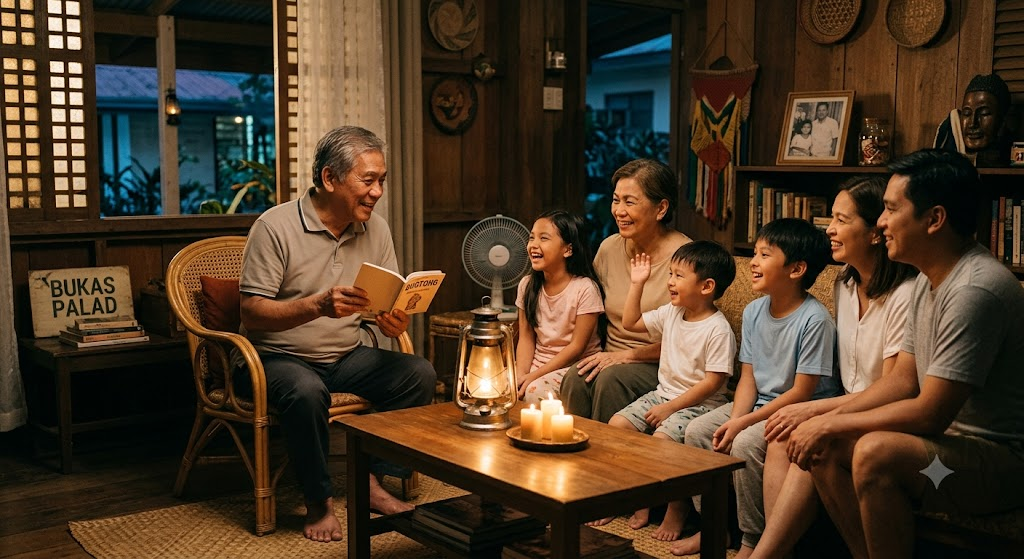
Do you love solving puzzles and brain teasers? If you do, you are going to love learning about a Bugtong. A bugtong is a traditional riddle from the Philippines. It is a super fun word game that tests your brain and imagination. Long before tablets, phones, and video games, families would gather around to play this classic mind game.
Growing up, my grandparents would challenge my cousins and me with these clever little poems during brownouts or lazy Sunday afternoons. At first, the clues sounded completely silly or impossible to solve. But once you figured out the hidden meaning, it felt like a superpower!
In this article, we will explore everything about these amazing cultural puzzles. You will learn how they work, read some cool examples, and even get to try solving a few yourself. Let us dive into the wonderful world of Pinoy riddles and boost your brainpower!
What Exactly is a Bugtong?
A bugtong (pronounced boong-tong) is a short statement or question that hides a secret meaning. In English, we call it a riddle. It acts like a little mystery waiting for a detective to solve it.
These brain games usually describe a simple everyday object, like a kitchen tool, an animal, or a part of your body. However, the description uses surprise, wordplay, and symbols to trick your brain.
Traditionally, a bugtong is spoken in a poetic, rhyming way in the Tagalog language. The person asking the riddle usually starts by saying “Bugtong-bugtong, palabugtong.” This special phrase simply means “Riddle, riddle, let the puzzle begin!” It is an invitation to stop and think outside the box.
A Fun Part of Philippine History and Culture
Did you know that these clever riddles are a huge part of Philippine culture? Long ago, before the internet, ancestors used them to pass the time and share wisdom.
They are a key part of Philippine folklore, sitting right next to salawikain (proverbs) and folk songs. Elders used these mind games to teach children about nature, animals, and household items.
Passing these riddles down from generation to generation kept the local language and history alive. It is a beautiful way to show how creative and witty the early Filipinos were. Today, schools celebrate them during language month (Buwan ng Wika) to make sure kids keep loving their heritage.
Why These Word Games are Great for Your Brain
Playing with a bugtong is like taking your brain to the gym. It is an amazing exercise for your mind!
When you hear a riddle, your brain has to work hard to connect clues. It stops you from just seeing things in a normal way. Instead, you have to imagine how one thing looks or acts like something else entirely.
This builds your creative thinking skills. It teaches you how to solve problems and look at challenges from different angles. Plus, it is a fantastic way to improve your memory and vocabulary while having a blast with your friends.
How to Play the Riddle Game
Playing the game is very easy and needs zero expensive toys. All you need are two or more players and a good imagination.
One person takes the turn of the riddle master. They announce the puzzle using the traditional rhyming chant. The other players must listen very carefully to every single word.
After hearing the clues, the players take turns guessing the answer. If the puzzle is too hard, the master can give a small hint. Once someone guesses correctly, they become the new riddle master and get to stump everyone else!
The Deep Well and the Knives
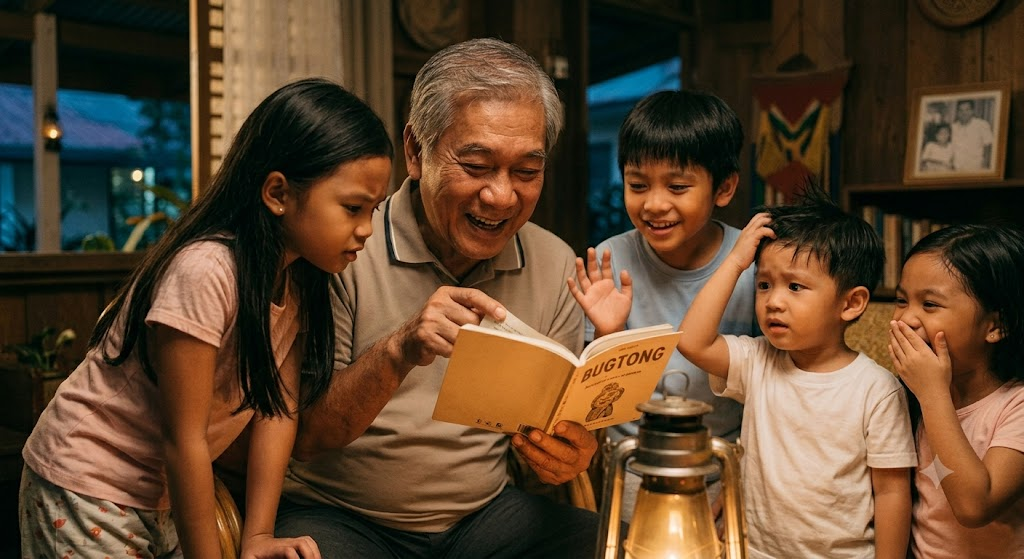
Let us look at our first classic example. The riddle goes like this: Balong malalim, puno ng patalim. In English, this translates to: “A deep well full of knives.”
Wow, that sounds a little scary, right? Do not worry; it is not a dangerous trap at all! Let us use our imagination to solve it.
What is inside your mouth that is deep and wet like a well? And what sharp, white things are lined up inside that can bite into an apple? If you guessed your teeth, you are 100% correct! The teeth are the “knives,” and the mouth is the “deep well.”
The Soldier’s Heads
Here is another popular puzzle for you to try: Isang hukbong sundalo, dikit-dikit ang mga ulo. Translated to English, it means: “An army of soldiers with their heads stuck together.”
Imagine a big group of tiny soldiers standing perfectly straight in a neat row. They never move, but they work together to clean up the whole house.
Have you figured it out yet? Look around your house for a tool with lots of stiff bristles packed tightly together at the end of a long handle. Yes, it is a broom (walis)! The bristles are the soldiers standing at attention.
The Black Balls That Travel
Ready for a slightly tricky one? Try this: Dalawang bolang itim, malayo ang nararating. In English, this means: “Two black balls that can reach far places.”
Close your eyes and think about what two dark circles you have on your face. They can look up at the stars, read books, and see things miles away.
These two little circles help you travel the world just by looking at pictures or stepping outside. Of course, the answer is your eyes (mata)! Your eyes are the magic black balls.
The Spider Who Knows How to Sew
Let us check out an animal puzzle: Maliit pa si Nene, marunong nang manahi. In English, this translates to: “Little Nene already knows how to sew.”
Nene is just a little girl, but she is already super talented with thread and needles. But wait, what tiny creature in nature is famous for making long threads out of nothing?
If you guessed a spider (gagamba), you got it! Spiders spin beautiful, sticky webs to catch their food. It looks just like they are sewing a tiny blanket in the corner of the room.
The Loyal Shadow Friend
Here is a very sweet puzzle: Ako’y may tapat na kaibigan, kasama ko saan man ako magpunta. In English, this means: “I have a loyal friend who is with me wherever I go.”
This friend never leaves your side. When you run, they run. When you jump, they jump. But there is a catch—you can only see this friend when the bright sun is shining!
Did you guess your shadow (anino)? It is the best friend you can have on a sunny day, following your every step without making a single sound.
The Clothesline Wardrobe
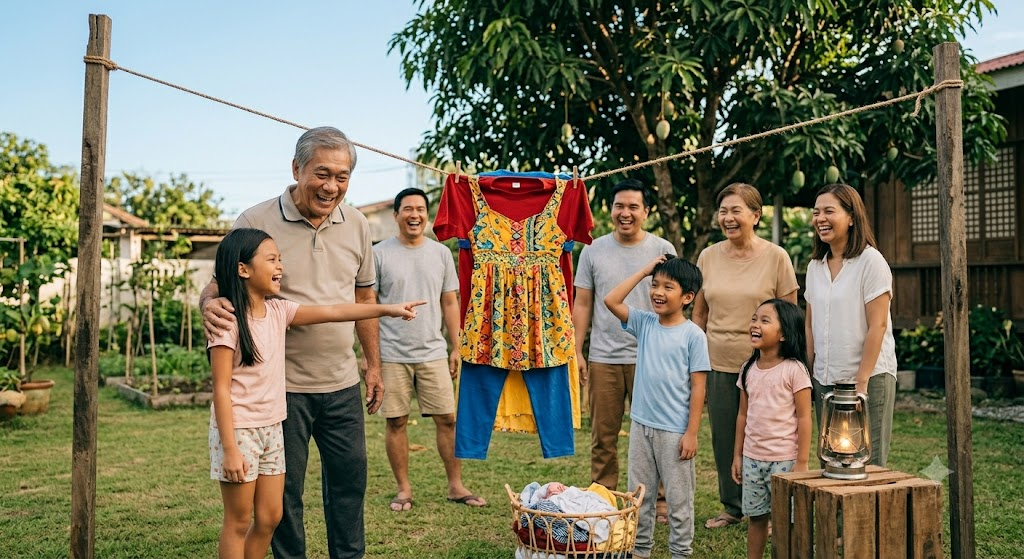
Let us finish our examples with a funny one: Hindi hari, hindi pari ngunit suot niya’y sari-sari. In English, it says: “Not a king, not a priest, but wears a colorful mix of clothes.”
Imagine someone standing outside wearing a red shirt, blue pants, and a yellow dress all at the exact same time. That sounds like a very silly outfit!
This riddle is about a wire or rope tied between two trees or posts. It holds up all the wet laundry to dry in the warm breeze. It is a clothesline (sampayan)!
Detailed Summary Table
To help you remember all these fun puzzles, check out this quick guide table:
| Tagalog Riddle (Bugtong) | English Translation | The Secret Answer |
| Balong malalim, puno ng patalim | A deep well full of knives | Mouth and Teeth |
| Isang hukbong sundalo, dikit-dikit ang mga ulo | An army of soldiers with heads stuck together | Broom |
| Dalawang bolang itim, malayo ang nararating | Two black balls that can reach far places | Eyes |
| Maliit pa si Nene, marunong nang manahi | Little Nene already knows how to sew | Spider |
| Ako’y may tapat na kaibigan… | A loyal friend who is with me everywhere | Shadow |
| Hindi hari, hindi pari, ngunit suot niya’y sari-sari | Not a king or priest, wears mixed clothes | Clothesline |
Frequently Asked Questions
What age group are bugtong best for?
They are perfect for kids aged 5 and up. They use simple ideas that young children see every day, which makes learning super fun!
Can non-Filipinos enjoy these riddles?
Yes! Anyone can enjoy them. You just need to read the English translations and use your imagination to guess the answers.
Are there harder bugtong for adults?
Definitely! While kids’ riddles are simple, there are advanced ones with tricky wordplay and adult humor that even parents have to think hard to solve.
How do I start a bugtong game with my friends?
Just shout out the fun chant, “Bugtong-bugtong, palabugtong!” Then, read the puzzle clues and see who can shout the correct answer first.
Do riddles help kids learn Tagalog?
Yes, they are a great way to practice new words. They show how words rhyme and connect in Philippine literature.
Where can I find more of these Filipino riddles?
You can ask your grandparents, check out books on Philippine folklore, or look up fun puzzle videos online.
Conclusion
A bugtong is more than just a simple game. It is a wonderful piece of history that brings families together, makes you laugh, and exercises your brain. It proves that you do not need fancy gadgets to have a great time and test your wits.
Now it is your turn to be the riddle master! Try asking your friends the riddle about the deep well or the soldier’s heads. See if they can use their imagination to crack the code.
Did you enjoy learning about these fun puzzles? Grab a friend, share your favorite puzzle from this article, and see who can solve it first. Leave a comment below with your favorite riddle or tell us how fast you solved them!